
Low back pain
Its official guideline in Annals of Internal Medicine recommends acupuncture as a first-line, non-drug option for low back pain—to try before medication.
Now Open! Experience our care with a free initial assessment and $100 off your first treatment.
Struggling with chronic back or joint pain? See what clinical research actually shows about how acupuncture naturally blocks pain without medication.
Yongseok Lee K.M.D L.Ac
6/23/20262 min read
The mechanism
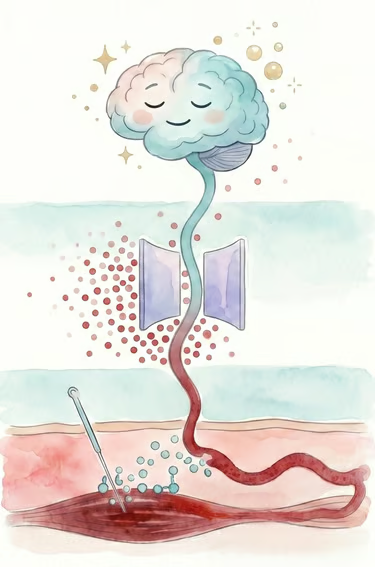
The needle releases ATP, which breaks down into adenosine, a natural pain-dampening molecule. It quiets the pain nerves nearby, while local blood flow rises and tight muscle bands release.
Goldman et al., Nature Neuroscience, 2010
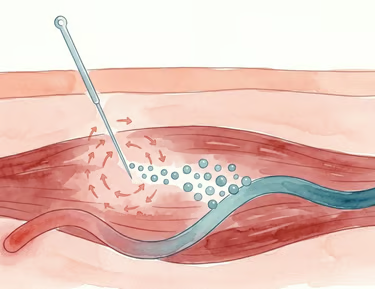
Adenosine released around the needle calms the local pain nerve and lifts blood flow.
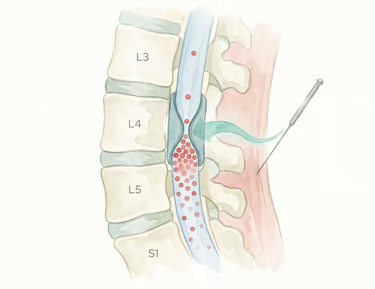
A “gate” filters the pain signal so far less of it reaches the brain.
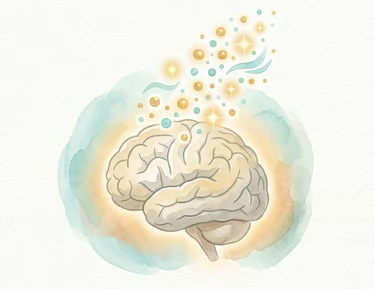
Endorphins—the body’s natural painkillers—ease how pain is felt.
What the research says
Acupuncture is increasingly included in evidence-based pain care—not as a replacement for a proper diagnosis, but as a non-drug option supported by major clinical guidelines and large randomized-trial analyses.
Its official guideline in Annals of Internal Medicine recommends acupuncture as a first-line, non-drug option for low back pain—to try before medication.
Research suggests acupuncture may help ease chronic low-back pain, neck pain, and osteoarthritis (knee) pain.
patients across 29 randomized trials. Pooled data found acupuncture more effective than both no treatment and placebo (“sham”) needling—with benefits that persisted over time.
Vickers et al., Acupuncture Trialists’ Collaboration
Commonly treated here
Is it safe? What to expect
Performed by a licensed acupuncturist with sterile, single-use needles, acupuncture has a strong safety record. Most people feel little more than a dull ache or warmth; side effects are usually minor and brief.
Lasting relief typically comes from a short series of sessions, not a single visit. Your treatment plan is based on your symptoms, movement, health history, and response to care.
Disclaimer: This article is for educational purposes only and does not constitute medical advice. If your stiff neck is accompanied by a high fever, severe headache, or sensitivity to light, seek emergency medical attention (potential meningitis). If pain radiates down your arm into your fingers, consult a professional to rule out a cervical disc herniation.